
Farming With Nature, Not Against It: The Case for Biology Over Chemistry
Farming With Nature, Not Against It: The Case for Biology Over Chemistry takes place on Thu, Sep 24, 2026 at 1:00 PM (EDT) at 134 W 29th St in New York, NY, and runs until 2:30 PM. Entry is free; the listing is on Luma.
About this event
This discussion group explores biological approaches like biocontrols and agroforestry to improve agricultural productivity. Experts examine how these methods work across different climates and address barriers to their widespread adoption. Participants analyze evidence supporting local ecosystems and strategies for scaling sustainable farming systems globally.
Full description from organizerShow less
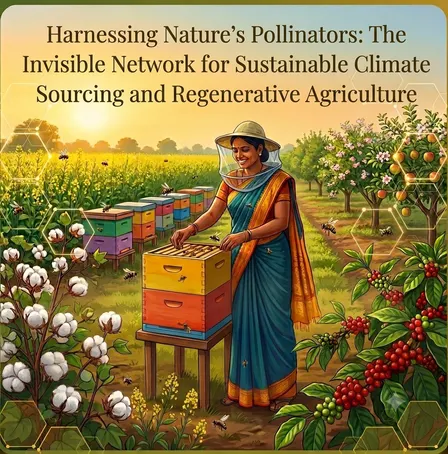
About the session For much of the past century, agricultural productivity has been built around our ability to control nature. Synthetic fertilizers supplied nutrients. Chemical pesticides controlled insects and disease. Industrial inputs helped farmers dramatically increase yields and feed a growing global population. Those gains were real. So were some of the costs. Soil degradation, declining biodiversity, pesticide resistance, pressure on pollinators, and dependence on increasingly expensive inputs are forcing a harder question about what the next era of agricultural productivity should look like. What if we worked with more biology rather than adding more chemistry? A growing field of biological approaches is attempting to do exactly that. Biocontrols use predators, parasites, microorganisms, and other biological mechanisms to manage agricultural pests. Biofertilizers use microorganisms to support nutrient availability and plant growth. Managed pollination can strengthen the ecological infrastructure on which many crops depend. Agroforestry brings trees and greater biological diversity into farming landscapes, potentially improving soil, water, resilience, and livelihoods. These approaches are different, but they share an underlying idea: the biological systems surrounding a farm are not obstacles to productivity. They are part of its productive infrastructure. The science is advancing. Farmers and practitioners are already applying these approaches in different contexts. Companies are developing biological products. Conservation organizations are increasingly thinking about working landscapes alongside protected areas. So why aren't biological approaches scaling faster? Some of the barriers are practical. Biological products can behave differently across climates and ecosystems. Production, storage, distribution, and application may require different infrastructure. Farmers and extension workers need confidence that alternatives will perform reliably. Some are institutional. Regulatory systems designed around conventional agricultural inputs may not fit newer biological products particularly well. Investment markets understand established input businesses better than emerging biological ones. Extension services and farmer networks responsible for translating research into practice are often stretched thin. And some questions are still genuinely open. Which approaches work best, where, and under what conditions? What does the evidence support and where is enthusiasm running ahead of it? Can biological solutions compete economically with established inputs? What does adoption look like for a smallholder farmer who cannot afford a failed harvest while experimenting with a new system? These are not simply questions about replacing one bottle with another. They are questions about how we build a different agricultural ecosystem. Discussion Group Leaders Lorena James is Founder & Executive Director at Invasive Impact Initiatives, advancing community-led solutions that connect invasive species management, regenerative agriculture, circular economies, and environmental justice. Willis Ochieng, PhD is Executive Director at Creats International, Inc., advancing sustainable agriculture, food security, and resilient livelihoods for smallholder farmers. What to expect A practical, cross-disciplinary conversation bringing together people working on biological pest management, pollination, soil health, agroforestry, agricultural development, conservation, finance, and smallholder implementation. Participants will move between science and scale: what the evidence currently tells us, where biological approaches are already working, which barriers are preventing adoption, and what infrastructure is needed to move from promising solutions to widespread farmer use. The conversation will pay particular attention to smallholder agriculture in the Global South. Rather than assuming approaches developed for industrial farming can simply be transferred elsewhere, participants will explore what biological agriculture looks like when it starts with local ecosystems, farmer economics, existing knowledge, and the realities of adoption. Who this is for This session is for agricultural scientists and practitioners, biocontrol and biosolution innovators, conservation and agroforestry specialists, climate and nature finance professionals, agricultural development organizations, smallholder farmer advocates, policymakers, funders, and investors interested in the transition toward more biologically grounded farming systems. What you will get out of it A clearer picture of the different approaches sitting under the broad umbrella of biological agriculture and where evidence is strongest Practical perspectives on the regulatory, financing, distribution, and adoption barriers preventing promising approaches from reaching more farmers A more integrated view of pest management, pollination, soil biology, agroforestry, and ecosystem health rather than treating them as separate interventions Ground-level questions about what adoption looks like for smallholder farmers who cannot afford to take unnecessary production risks A sharper understanding of where climate finance, nature finance, development capital, and commercial investment could help build the infrastructure required for biological agriculture to scale
Keep going
All New York events →Similar events
View all →

Details
- When
- Thu, Sep 24, 2026 · 1:00 PM (EDT) · until 2:30 PM
- Where
- 134 W 29th St
- Address
- 134 W 29th St, New York, NY 10001, USA
- Price
- Free
- Genre
- Cultural Events
Questions
- When is Farming With Nature, Not Against It: The Case for Biology Over Chemistry?
- Thu, Sep 24, 2026 at 1:00 PM EDT.
- How much are tickets for Farming With Nature, Not Against It: The Case for Biology Over Chemistry?
- Entry is free.
- Where is Farming With Nature, Not Against It: The Case for Biology Over Chemistry?
- 134 W 29th St, 134 W 29th St, New York, NY 10001, USA, New York, NY.
- Where can I buy tickets for Farming With Nature, Not Against It: The Case for Biology Over Chemistry?
- Tickets are sold on Luma. This page links straight to that listing; no tickets are sold here.
- What time does Farming With Nature, Not Against It: The Case for Biology Over Chemistry end?
- It runs until 2:30 PM.