- When
- Europe/London (GMT)
- Where
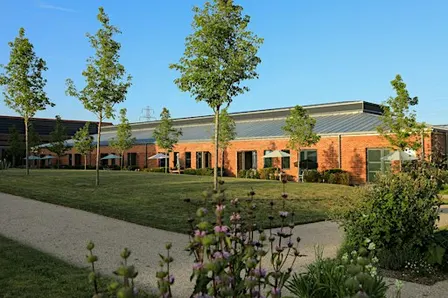
- Barnham Broom Hotel, Spa, Gym & Golf ClubHoningham Road, Barnham Broom, NR9 4DD
Tickets are sold on Eventbrite. We link straight to the listing — nothing is bought here. Listing details come from the source and can change. Eventovia indexes events; it does not organize them or sell tickets. Terms & Disclaimer
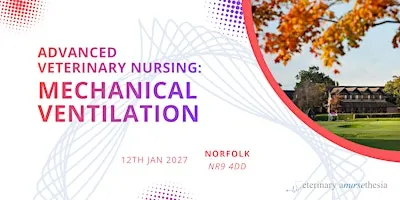
Norfolk - Advanced Veterinary Nursing: Mechanical Ventilation takes place on Tue, 12 Jan 2027 at 9:30 (GMT) at Barnham Broom Hotel, Spa, Gym & Golf Club in Norwich, United Kingdom. Tickets are £350 + on Eventbrite.
About this event
An advanced veterinary nursing session covers mechanical ventilation physiology and troubleshooting in Norfolk.
Full description from organizerShow less
Mechanical ventilation made practical: understand physiology, choose the right settings and confidently troubleshoot when things go wrong. Take mechanical ventilation beyond simply choosing a respiratory rate and tidal volume with a full day of advanced, practical and interactive CPD for veterinary nurses. Mechanical ventilation is becoming increasingly accessible in veterinary practice, but having a ventilator and knowing how to switch it on are only the beginning. Ventilating a patient changes far more than the way air moves in and out of the lungs. Positive-pressure ventilation affects respiratory mechanics, gas exchange, venous return and cardiovascular function, and the settings we choose can have significant consequences for the patient. This interactive one-day roadshow is designed to help veterinary nurses understand what the ventilator is actually doing to the patient, why we choose particular settings and, most importantly, how to recognise when something isn't going to plan. We'll move from the physiology of positive-pressure ventilation through to choosing settings, interpreting airway pressures and volumes, understanding gas exchange and troubleshooting the ventilated patient. You'll then put the theory into practice with a hands-on mechanical ventilation session and interactive clinical cases. Designed for veterinary nurses who already have a good understanding of anaesthesia and want to develop their knowledge further, this isn't a day about memorising ventilator settings. It's about understanding the physiology well enough to choose, change, and troubleshoot them for the patient in front of you. Our lectures include: Why Ventilation Changes Everything: Part 1 What actually happens when we take over breathing for our patient? We'll explore the pressure gradients that normally move air through the respiratory system and what changes when spontaneous negative-pressure breathing is replaced by positive-pressure ventilation. We'll look at respiratory system mechanics, including compliance and resistance, before exploring one of the most important consequences of mechanical ventilation: its effect on the cardiovascular system. Understand why airway pressure, lung volume and intrathoracic pressure matter, and why changing the way a patient breathes can change much more than their ETCO₂. Why Ventilation Changes Everything: Part 2 Moving air isn't the same as achieving effective gas exchange. We'll explore how mechanical ventilation influences anatomical, apparatus and alveolar dead space, V/Q matching and oxygenation, and why apparently adequate tidal volumes and minute ventilation don't necessarily mean the patient is ventilating effectively. We'll also look at the ETCO₂–PaCO₂ gradient, oxygenation indices and the information these can give us about what's happening inside the lungs. Setting Up for Success: Choosing Your Ventilator Settings Pressure or volume? What tidal volume? How much PEEP? What respiratory rate? And where should you actually start? We'll break down the key ventilator settings and, more importantly, the physiology behind them. From pressure- and volume-controlled ventilation to respiratory rate, inspiratory pressure, tidal volume, PEEP, I ratio, flow and FiO₂, we'll explore how each setting influences the patient. Rather than relying on one-size-fits-all numbers, you'll learn how to choose sensible starting settings and then adjust them according to the individual patient and the information your monitoring is giving you. Ready, Steady, Ventilate! Time to get hands-on. In this practical session, we'll work through the process of setting up and checking a ventilator, connecting it to the breathing system and selecting appropriate initial settings. You'll have the opportunity to adjust pressures, volumes, respiratory rates, PEEP and alarms, see what happens when settings are changed and practise the process of initiating, managing and weaning a patient from mechanical ventilation. The aim is to make using a ventilator feel less like pressing buttons on an unfamiliar machine and more like making deliberate physiological decisions for your patient. When Ventilation Gets Difficult The patient is ventilating — but something isn't right. ETCO₂ is climbing. Airway pressures are increasing. SpO₂ is falling. Delivered tidal volume has changed. Or perhaps the blood pressure has suddenly dropped. We'll take a practical approach to troubleshooting the ventilated patient, exploring hypoxaemia, hypercapnia, poor compliance, airway obstruction, leaks, atelectasis, patient–ventilator dyssynchrony and the cardiovascular consequences of positive-pressure ventilation. Rather than simply changing a setting until the numbers improve, we'll focus on working out why the numbers have changed and what we should do next. The Machines Are Beeping – What Do You Do Next? Now it's your turn to make the decisions. Work through progressive clinical cases where the patient, monitor and ventilator won't always behave as expected. Using capnography, SpO₂, blood pressure, airway pressures, delivered volumes and changing clinical information, you'll decide what might be happening and what you would change next. There may not always be one perfect answer. The aim is to bring together everything from the day and build confidence in interpreting the information in front of you, troubleshooting problems and adapting ventilation to the individual patient. Take Your Best Guess! Finish the day with a fast-paced, interactive ventilation challenge. Put your knowledge to the test with ventilator scenarios, monitor traces, terminology, settings and a few curveballs along the way. No pressure and no pass marks; just have a go, see what you know and consolidate everything we've covered throughout the day. Plus: Four Recorded Advanced Ventilation Lectures Your learning doesn't finish at 5pm. Your ticket also includes one month of access to four additional recorded advanced ventilation lectures, allowing you to explore some of the more complex areas of mechanical ventilation after the live event and watch the sessions at a time that suits you. Mechanical Ventilation in the ICU Mechanical ventilation doesn't stop at the end of anaesthesia. Explore ventilation of the critically ill patient, including respiratory failure, oxygenation problems, longer-term ventilation, sedation, monitoring, nursing care, complications and weaning. Blood Gases: Interpretation to Intervention Move beyond simply reading the numbers.
Keep going
All Norwich events →Similar events
View all →









Details
- When
- Tue, 12 Jan 2027 · 9:30 (GMT)
- Where
- Barnham Broom Hotel, Spa, Gym & Golf Club
- Address
- Honingham Road, Barnham Broom, NR9 4DD
- Price
- £350 +
- Genre
- Wellness Classes
Questions
- When is Norfolk - Advanced Veterinary Nursing: Mechanical Ventilation?
- Tue, 12 Jan 2027 at 9:30 GMT.
- How much are tickets for Norfolk - Advanced Veterinary Nursing: Mechanical Ventilation?
- Tickets are £350 +.
- Where is Norfolk - Advanced Veterinary Nursing: Mechanical Ventilation?
- Barnham Broom Hotel, Spa, Gym & Golf Club, Honingham Road, Barnham Broom, NR9 4DD, Norwich, United Kingdom.
- Where can I buy tickets for Norfolk - Advanced Veterinary Nursing: Mechanical Ventilation?
- Tickets are sold on Eventbrite. This page links straight to that listing; no tickets are sold here.