GPF Exe Wkshp on Value Creation in Liquid Bulk Log, 3-5 Mar 27, Singapore
Workshops & Training- When
- Asia/Singapore (GMT+8)
- Where
- M Hotel SingaporeAnson Road, Singapore, 079908
Tickets are sold on Eventbrite. We link straight to the listing — nothing is bought here. Listing details come from the source and can change. Eventovia indexes events; it does not organize them or sell tickets. Terms & Disclaimer
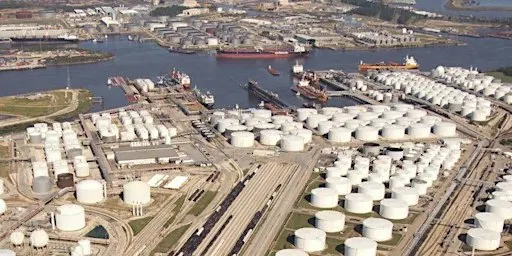
GPF Exe Wkshp on Value Creation in Liquid Bulk Log, 3-5 Mar 27, Singapore takes place on Wed, 3 Mar 2027 at 9:00 am (GMT+8) at M Hotel Singapore in Johor Bahru, Malaysia. Prices are shown on the Eventbrite listing.
About this event
A small group intensive workshop on value creation in liquid bulk logistics runs March 3–5, 2027 in Singapore with online availability.
Full description from organizerShow less
GPF Executive Workshop on Value Creation in Liquid Bulk Logistics, 3-5 Mar 27, Singapore. Small Group. Intensive. Online Program Avail GPF Executive Workshop on Value Creation in Liquid Bulk Logistics, 3-5 Mar 27, Singapore. Small Group. Intensive. Global Ports Forum presents – GPF Executive Workshop on Value Creation in Liquid Bulk Logistics, 3-5 Mar 27, Singapore. Small Group. Intensive. Dear industry colleagues Objectives. This three days executive training is targeted to provide a comprehensive outlook of Liquid Bulk Ports and Specialized Terminals for Liquid bulk operations and their role as the most crucial link in logistics supply chain. There is a whole range of Liquid Bulk Terminals and Ports from very basic barge loading / unloading systems to the most modern state-of-the-art and Single Buoy Mooring terminals ; depending upon type of cargo, market size and volume to be handled. Ownership, operatorship and commercial aspect also vary based on users’ requirements and risk perceptions. Large scale oil companies, refineries, suppliers, users and traders tend to control the supply chain by using their own dedicated terminals. However, common user bulk terminals are also equally important and these common user terminals cater to a number of users requiring terminal services for their liquid bulk cargo handling. This training program (on line or face to face as per situation), aims to enable participants to understand comprehensive process to develop ports and liquid terminals from site selection to hinterland mapping, assessment of market potential, optimization of investment in bulk liquid cargo handling, storage and hinterland connectivity. The program also targets to explain steps involved in process of environment management, detailed project report, concession agreements and understanding other commercial terms for liquid ports and terminals operations. Another objective of the workshop is to prepare the participants to excel in operations of liquid bulk terminals for satisfaction of customers and all stake holders in order to achieve desired financial objectives and create value for the stakeholders. Significance / relevance of the program With the rapid growth in volume of trade and advancement of technologies; traditional multi-purpose terminals are gradually becoming specialized. Based on the type of cargo required to be handled, the terminals are specifically being developed for Bulk Liquid operations. Unlike multi-purpose terminals, interchanging or substituting cargo in broader category is not feasible. Therefore developing specialized terminals to handle singular group of cargo exclusively is challenging and prone to a number of market related and commercial risks. Due to inherently greater market risks, the rewards are also better for specialized terminals. While container and dry bulk traffic has grown rapidly, liquid bulk shipments continue to play a crucial role in world seaborne trade. Effective management of Ports and Terminals by efficient commercial and operational excellence assumes a great importance. Bulk commodities like crude oil have relatively low value and logistics cost is the most controllable element in the entire value chain. Effective and efficient logistics management makes the most significant contribution to the profitability of business value chain. At both exports and imports end of the logistics chain, it is essential to create optimum infrastructure and handling, storage and hinterland connectivity /evacuation capacity in line with volume of commodity to be handled. The program will use a number of examples of Ports and terminals in different parts of the world and provide a broad overview to enable participants to draw on best practices which can be adapted as per their own operative environment. Deliverables At the end of this training program, the participants should be able to: Understand significance and role of Ports and terminals in national and regional context Learn the process of Ports and terminals development along with detailed steps involved at each stage of development Develop comprehensive understanding about markets, customer classification, expectations and aligning service levels & pricing with customer priorities. Get deep knowledge about bulk liquid logistics chain and total logistics cost comparison with calculation of sea freight, hinterland connectivity and land logistics costs. Learn about Port operations and cargo handling systems for liquid bulk. Preparing Standard Operating Procedures (SOPs) for all stages of bulk liquid operations. IMDG Codes and classification of liquid cargo Liquid storage tank operations – receipt, delivery, tank gauging and measurement procedure Safety, security and HSE standards for bulk liquid operations. Learn about revenue streams and calculation of income, operations and operating costs. Prepare income and expense statements and cash-flow for the business over a period of time. Understand financial calculations for Liquid Port and terminal investment. Methodology A combination of on-line presentations, on-line interactions among participants, on-line audio visuals, Individual and group case studies and problem solving methods will be used. Participants will be provided with advance study / reading material on each topic covered under deliverables. Who Should Attend Government and public bodies responsible for Port and Terminal development; Port Authorities; Port / Terminal developers, Port / Liquid terminal operators; Port investors, Banks, PE, Financial Institutions; Liquid Logistics Service providers; Shipping Companies, Forwarders, Logistics companies, Intermodal Service providers; Port Equipment Suppliers; Port Designers / Planners; Port Consultants and all those connected with bulk liquid trades – manufacturers / suppliers / traders / consumers. This program is designed for middle and senior management level participants for the working executives and managers with 3 years+ working experience in Maritime/ Logistics / liquid cargo industry. Program Structure Day 1 - Session 1 Scope of Bulk Liquid Logics business Bulk Liquid International Trade - volume and main commodities Bulk liquid ships – type, size and main trade lanes Bulk liquid terminals characteristics Infrastructure and superstructure components of bulk liquid terminals Port and hinterland connectivity for liquid logistics through road, rail and pipelines Day 1 - Session 2 Bulk Liquid Logistics ownership structure Privatization and Concession Agreements for liquid terminals. Level of privatization and legal / financial framework being adopted by various nations through different type of concession agreements between government policy makers and private sector. Understanding details of concessions and developing strategies for management and effective implementation of Concession Agreements. Day 2 - Session 3 Development process and master planning Port / terminal Development process: A systemic approach to step wise process of Ports and terminals development: Stage 1 – Site selection, understanding statutory policies and requirement for liquid bulk terminal, prefeasibility study and data collection, preparing roadmap for project execution Stage 2 – Modelling and studies of marine conditions, Rapid Environment Impact Assessment, Assessment of Business and Cargo potential with hinterland mapping and competition analysis Stage 3 – Market assessment and price sensitivity, Detailed Environment Impact Assessment, Detailed Project Report Stage 4 – Financial analysis and Financial closure with optimization in investment. Stage 5 – Master Planning to build sustainable resilience, Designing liquid ports, terminals, layout, tank-farms, pipelines, cargo receipt and delivery systems. Construction contracting and Equipment procurement for phase wise development as identified in master plan.
Keep going
All Johor Bahru events →Similar events
View all →







Details
- When
- Wed, 3 Mar 2027 · 9:00 am (GMT+8)
- Where
- M Hotel Singapore
- Address
- Anson Road, Singapore, 079908
- Price
- See listing
- Genre
- Workshops & Training
Questions
- When is GPF Exe Wkshp on Value Creation in Liquid Bulk Log, 3-5 Mar 27, Singapore?
- Wed, 3 Mar 2027 at 9:00 am GMT+8.
- How much are tickets for GPF Exe Wkshp on Value Creation in Liquid Bulk Log, 3-5 Mar 27, Singapore?
- Prices are not published in the listing data; they are shown on Eventbrite.
- Where is GPF Exe Wkshp on Value Creation in Liquid Bulk Log, 3-5 Mar 27, Singapore?
- M Hotel Singapore, Anson Road, Singapore, 079908, Johor Bahru, Malaysia.
- Where can I buy tickets for GPF Exe Wkshp on Value Creation in Liquid Bulk Log, 3-5 Mar 27, Singapore?
- Tickets are sold on Eventbrite. This page links straight to that listing; no tickets are sold here.