The Feeding Relationship
- When
- Pacific/Auckland (GMT+13)until 8:00 pm
- Where
- Partnering with ADHD304 Tuam Street, Christchurch Central City, Christchurch 8011, New Zealand
Tickets are sold on Events. We link straight to the listing — nothing is bought here. Listing details come from the source and can change. Eventovia indexes events; it does not organize them or sell tickets. Terms & Disclaimer
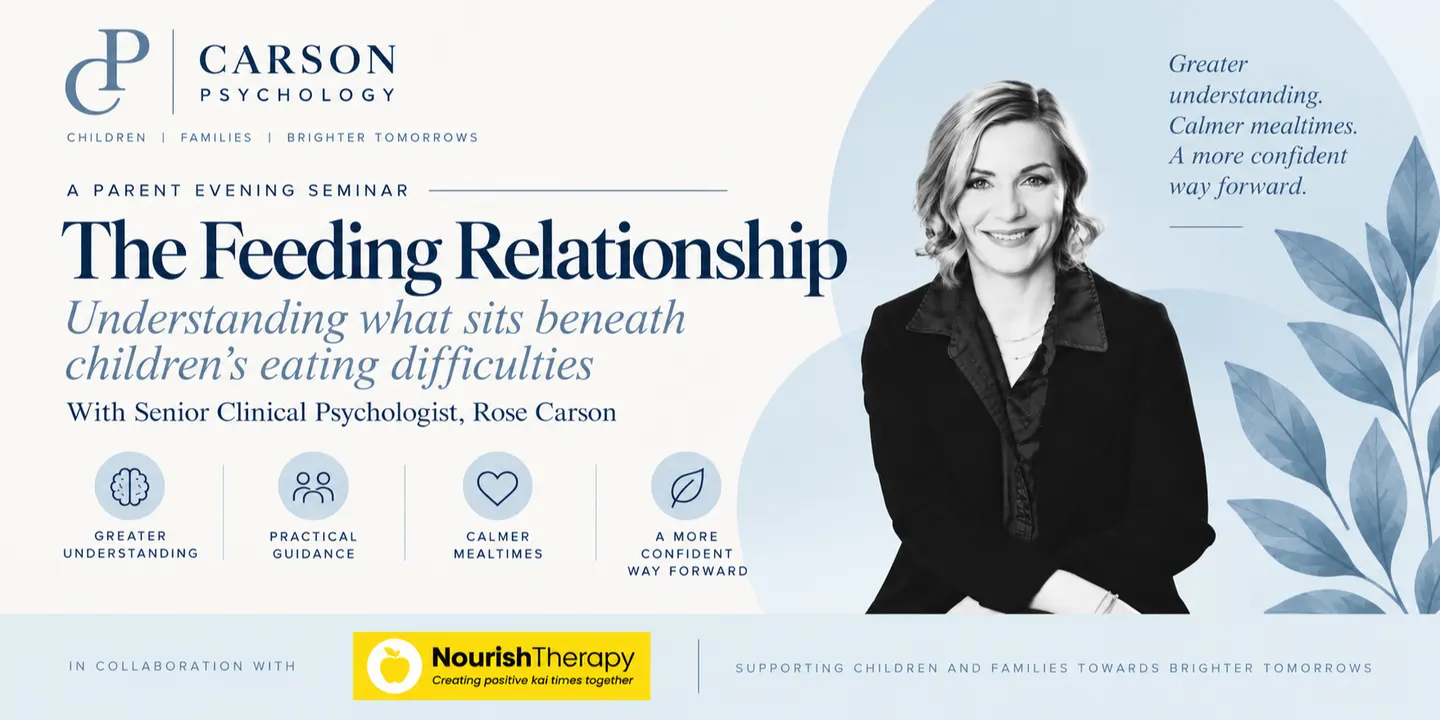
The Feeding Relationship takes place on Tue, 3 Nov 2026 at 6:00 pm (GMT+13) at Partnering with ADHD in Christchurch, New Zealand, and runs until 8:00 pm. Entry is free; the listing is on Events.
About this event
Senior Clinical Psychologist Rose Carson presents "The Feeding Relationship," an evening for parents and caregivers exploring emotional and sensory factors shaping children's relationships with food.
Full description from organizerShow less
When eating becomes difficult, it can affect far more than what happens at the table. Join Senior Clinical Psychologist Rose Carson for a thoughtful, evidence-informed evening exploring the emotional, sensory and developmental factors that can shape a child’s relationship with food and how parents can respond with greater understanding, confidence and connection. No diagnosis is required to attend. -- About the evening For some children, eating is straightforward. For others, food can become a source of anxiety, sensory overwhelm, uncertainty or distress — and over time, mealtimes can become increasingly difficult for the whole family. The Feeding Relationship is an evening designed for parents and caregivers who want to understand more deeply what may be happening beneath their child’s feeding difficulties. Led by Senior Clinical Psychologist Rose Carson, and presented by Carson Psychology in collaboration with Nourish Therapy, the seminar brings together psychological and feeding perspectives to explore the complex factors that can influence how children experience food and eating. Rather than focusing simply on what a child will or will not eat, we will consider why eating may feel difficult in the first place. We’ll explore how anxiety, sensory sensitivities, appetite, neurodiversity, previous experiences with food and patterns around mealtimes can all shape a child’s relationship with eating. The evening will also consider why difficulties can become increasingly established over time, how understandable attempts to help can sometimes add pressure to an already stressed system, and what can support children toward greater safety, confidence and flexibility around food. This is not an evening about perfect parenting, forcing food or following a single feeding formula. It is an opportunity to step back, understand the whole picture and develop a more considered way forward. -- What we’ll explore During the evening, Rose will explore: • why some children experience food and eating very differently from others • the relationship between anxiety, avoidance and feeding difficulties • sensory sensitivities to texture, smell, taste, appearance and predictability • appetite, hunger awareness and low interest in eating • how autism, ADHD and other neurodevelopmental differences can influence feeding • how experiences such as vomiting, choking, pain or illness may affect a child’s sense of safety around food • the difference between developmentally common selective eating and more significant feeding concerns • why pressure, persuasion and conflict can sometimes make eating harder • how feeding patterns can become established within families over time • practical ways to support greater safety, flexibility and confidence around eating • when further feeding, psychological, nutritional or medical assessment may be helpful Who is this evening for? This seminar has been created for parents and caregivers navigating feeding concerns of many different kinds. It may be particularly helpful if your child eats a very limited range of foods, becomes distressed when new foods are offered, is highly sensitive to texture or smell, worries about choking or vomiting, appears to have very little appetite, struggles to eat outside the home, or experiences significant stress around meals. It may also be relevant for families of children with autism, ADHD, anxiety or other neurodevelopmental differences where eating has become an area of concern. Your child does not need to have a diagnosis of ARFID or any other feeding or eating disorder. You may simply have a sense that eating has become harder than it should be — and want to understand why. What you’ll take away • Greater understanding I A clearer picture of what may sit beneath your child’s feeding behaviour — rather than simply focusing on what appears on the plate. • A more nuanced perspective I An understanding of how anxiety, sensory experience, appetite, neurodevelopment, learning and family dynamics can interact around food. • Practical guidance I Ideas for responding to feeding difficulties in ways that support safety and connection while reducing unnecessary pressure. • A more confident way forward I A clearer sense of what your child may need, what might be maintaining the difficulty, and when additional professional support could be useful.
Keep going
All Christchurch events →Similar events
View all →





Details
- When
- Tue, 3 Nov 2026 · 6:00 pm (GMT+13) · until 8:00 pm
- Where
- Partnering with ADHD
- Address
- 304 Tuam Street, Christchurch Central City, Christchurch 8011, New Zealand
- Price
- Free
- Weather
- 15°C · Light drizzleForecast at 6:00 pm (GMT+13)
Questions
- When is The Feeding Relationship?
- Tue, 3 Nov 2026 at 6:00 pm GMT+13.
- How much are tickets for The Feeding Relationship?
- Entry is free.
- Where is The Feeding Relationship?
- Partnering with ADHD, 304 Tuam Street, Christchurch Central City, Christchurch 8011, New Zealand, Christchurch, New Zealand.
- Where can I buy tickets for The Feeding Relationship?
- Tickets are sold on Events. This page links straight to that listing; no tickets are sold here.
- What time does The Feeding Relationship end?
- It runs until 8:00 pm.